Millwright Rigging
Study Guide
Rigging is one of the most important skills for millwrights. This guide covers sling selection, load calculations, center of gravity, crane safety, and lifting procedures for Red Seal exam preparation.
What Is Rigging?
Rigging involves preparing, securing, and moving loads using equipment. The goal is to move loads safely while maintaining control throughout the lift.
Common rigging equipment:
Working Load Limit (WLL)
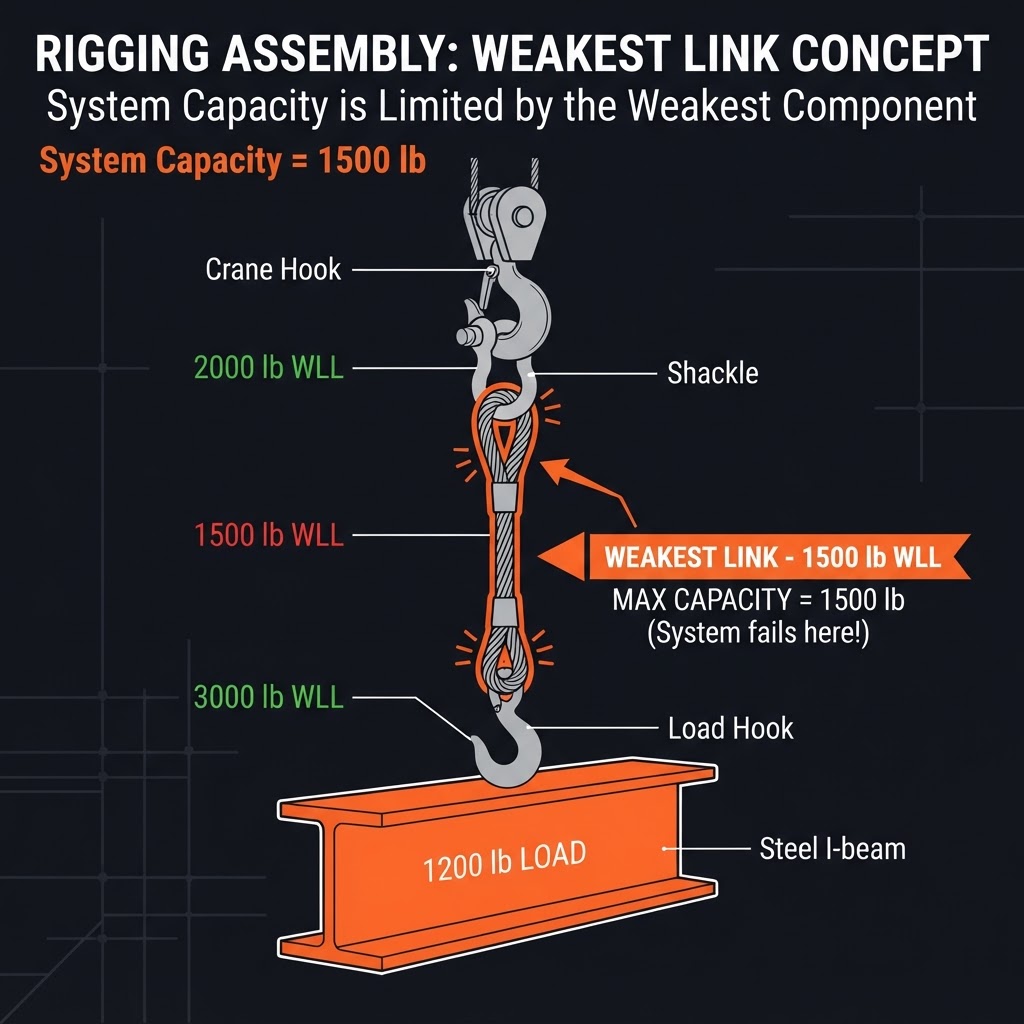
Every rigging component has a Working Load Limit (WLL) — the maximum load a piece of rigging equipment is designed to handle under normal operating conditions.
Important Rule
The WLL of the entire rigging assembly is only as strong as its weakest component.
If a sling is rated for 2,000 lb but the shackle is rated for 1,500 lb, the assembly is limited to 1,500 lb.
Rigging WLL Calculator
Calculate sling tension and verify against WLL
Each leg carries 1155 lb against an effective WLL of 1500 lb.
Can you calculate rigging WLL under exam conditions?
Test yourself with timed Red Seal–style rigging questions.
Types of Slings
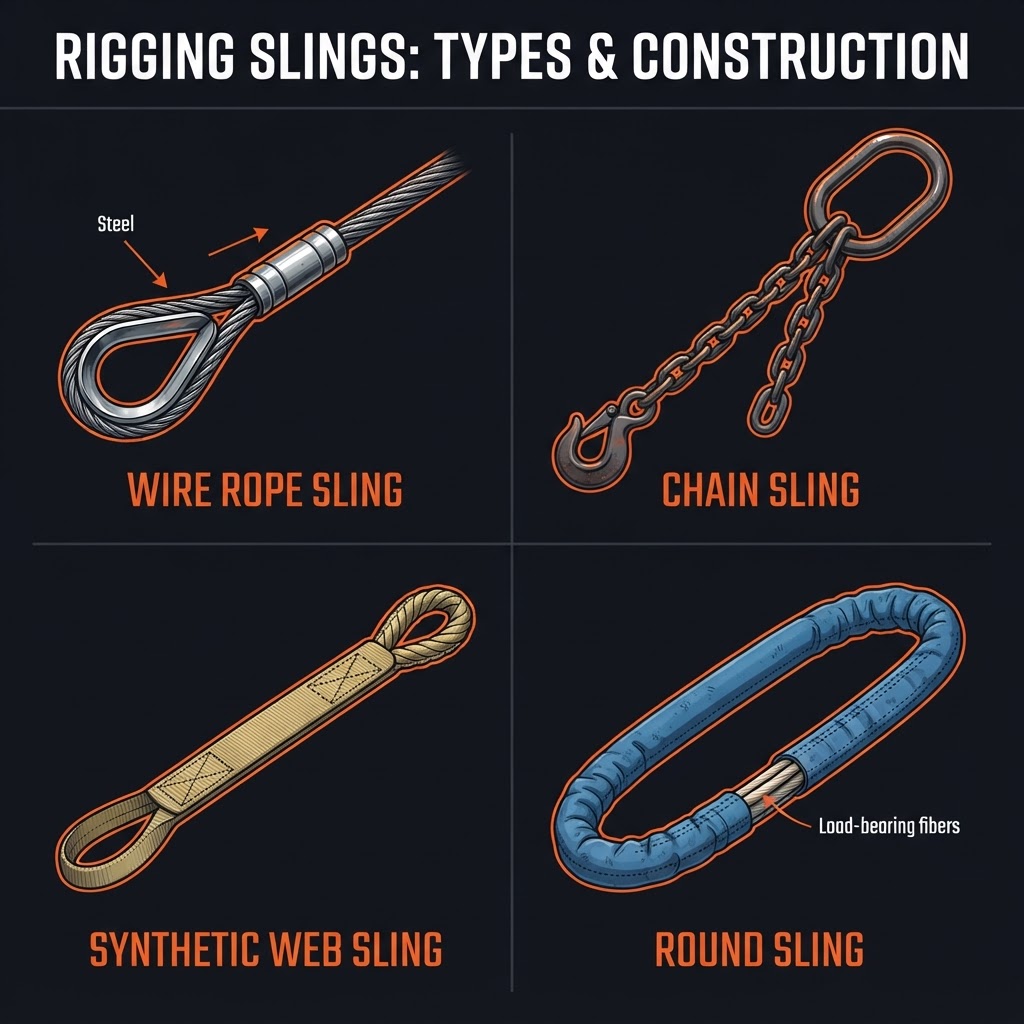
Wire Rope Slings
Advantages
- +Durable
- +Resistant to abrasion
- +Suitable for heavy loads
Disadvantages
- −Can damage delicate surfaces
- −Difficult to inspect internally
Chain Slings
Advantages
- +Extremely durable
- +Resistant to heat
- +Adjustable configurations available
Disadvantages
- −Heavier than synthetic slings
Synthetic Web Slings
Advantages
- +Lightweight
- +Flexible
- +Less likely to damage loads
Disadvantages
- −Vulnerable to cuts and abrasion
- −Can be damaged by chemicals and heat
Round Slings
Advantages
- +Flexible
- +Excellent load protection
- +Lightweight
Disadvantages
- −Damage may be hidden beneath the outer cover
Understanding the Center of Gravity
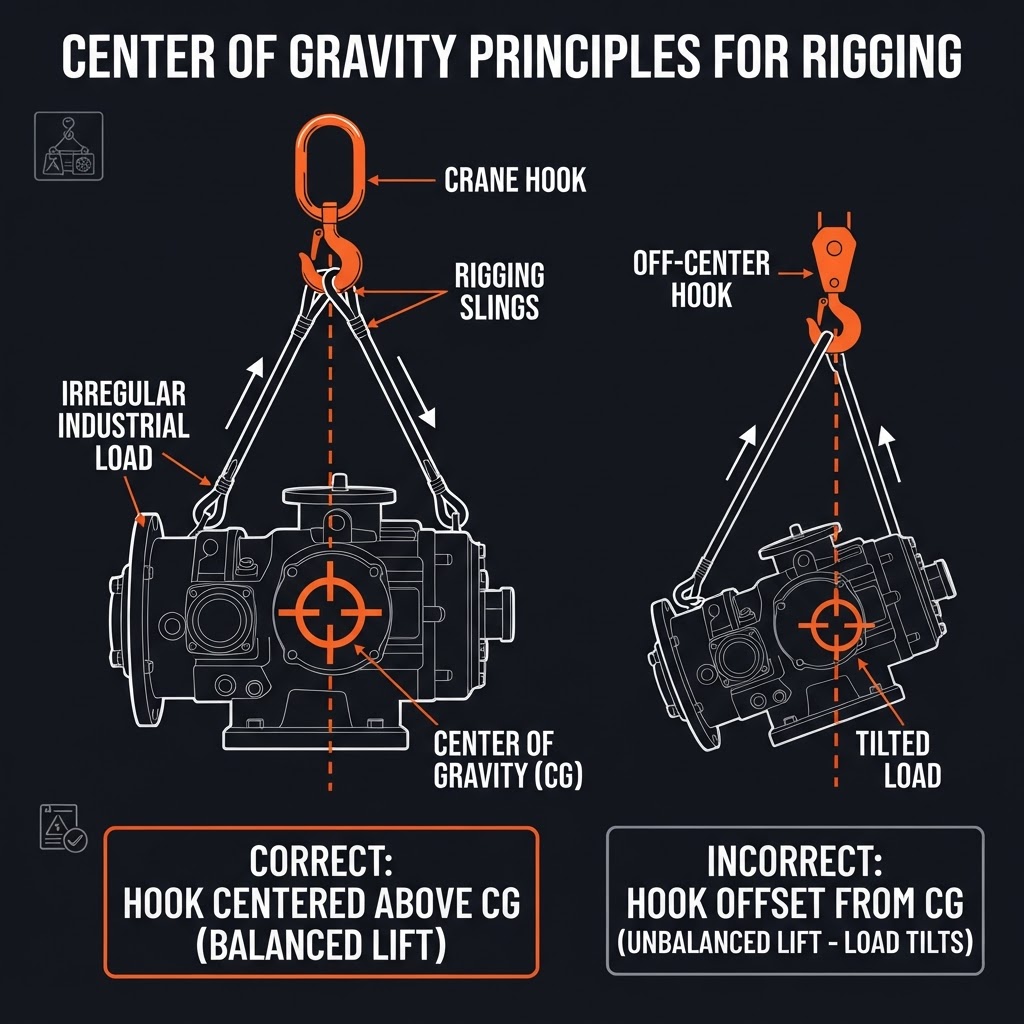
The center of gravity is the point where a load's weight is balanced. The hook should be positioned directly above the center of gravity whenever possible. Loads lifted away from their center of gravity may tilt or shift unexpectedly.
Many Red Seal questions focus on load stability and center of gravity concepts rather than complex calculations.
Sling Angle Effects
Interactive Sling Angle Calculator
Tap an angle to see the tension change
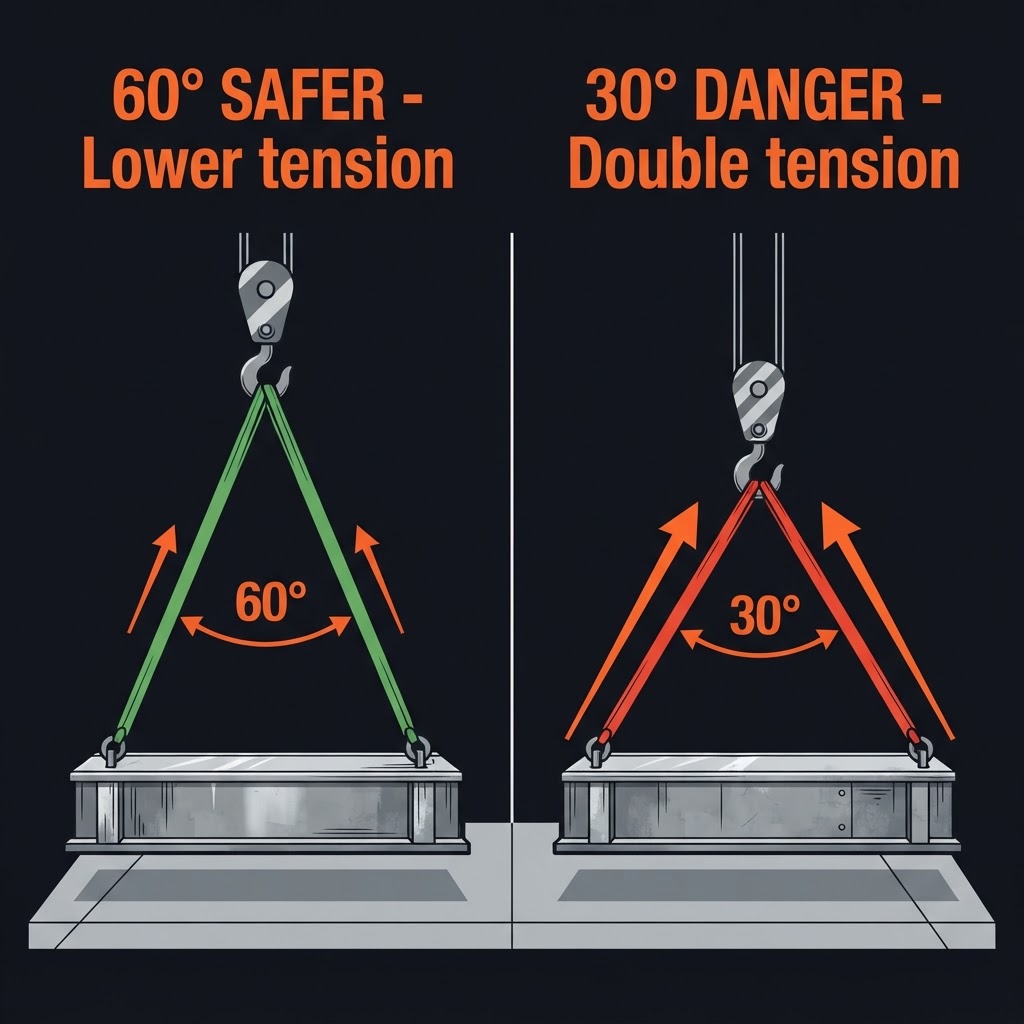
At 60°, each sling leg carries 578 lb for a 1000 lb load — 1.16× the vertical tension. This is a safe working angle.
As the sling angle becomes smaller (flatter), the force on each sling increases significantly.
Key Principle
A smaller sling angle creates higher sling tension.
Common Mistake
Workers often assume a 2-leg sling always provides full WLL per leg. In reality, as sling angle decreases (becomes flatter), tension in each leg increases beyond the rated WLL — potentially overloading the sling.
EXAM TIP
The minimum safe sling angle is 45°, but 60° or greater is strongly preferred. Below 45°, tension increases so severely that a properly rated sling can be overloaded by a load well within its apparent capacity.
Hitch Types
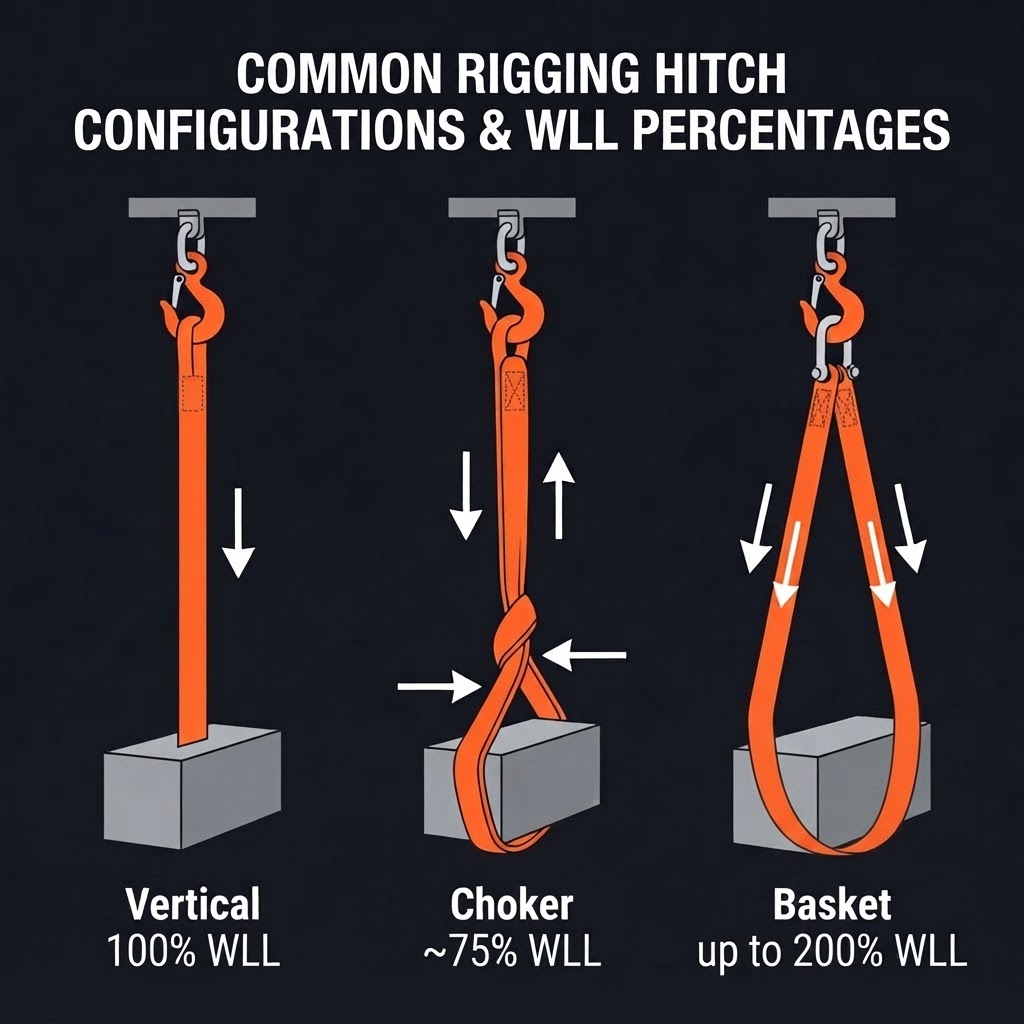
Vertical Hitch
A single sling attached directly to a load.
Advantages
- +Simple setup
- +Full sling capacity available
Disadvantages
- −Less load control
Choker Hitch
The sling wraps around the load and tightens under tension. Rated at approximately 75–80% of vertical hitch WLL due to the choking angle.
Advantages
- +Helps secure and control loads
- +Prevents load from slipping
Disadvantages
- −Reduces sling capacity to ~75–80% of rated WLL
- −Can damage certain loads
Basket Hitch
The sling supports the load from underneath.
Advantages
- +Better load distribution
- +Higher lifting capacity
Disadvantages
- −Load must remain balanced
Wire Rope D/d Ratio
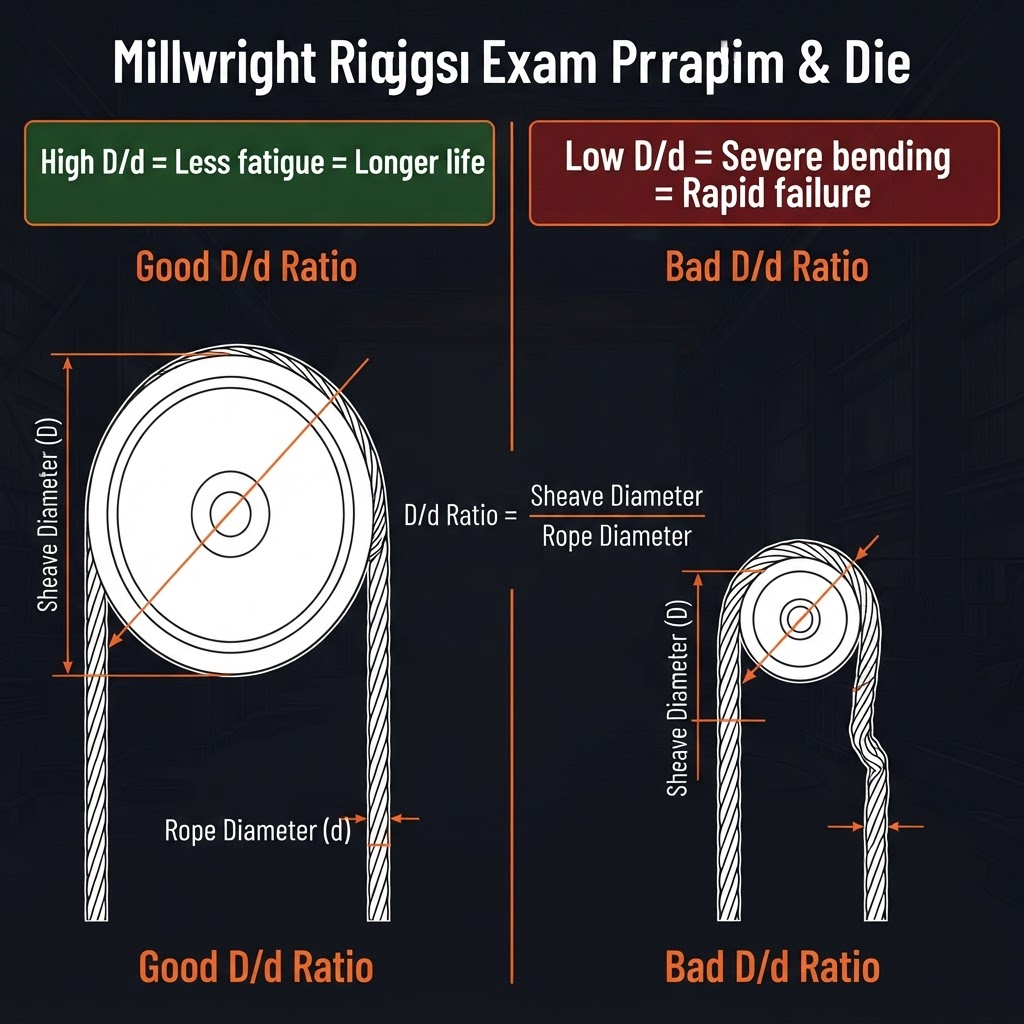
The D/d ratio compares the diameter of the sheave or drum (D) to the diameter of the wire rope (d). A larger D/d ratio means less bending stress on the wire rope and longer service life.
Key Rule
A higher D/d ratio = less rope fatigue = longer rope life.
EXAM TIP
If the sheave is too small relative to the wire rope diameter, the rope is severely bent with each pass, causing rapid wire fatigue and early failure. Always follow the manufacturer's minimum D/d ratio specification.
Pre-Lift Inspection
Slings
Shackles
Hooks
Defective equipment must be removed from service immediately.
Crane Safety Basics
Before lifting a load:
- 1.Determine the load weight.
- 2.Verify crane capacity.
- 3.Inspect all rigging equipment.
- 4.Identify the load path.
- 5.Establish communication methods.
- 6.Ensure personnel are clear of the load.
Never stand beneath a suspended load.
Common Rigging Hazards
Sample Practice Questions
What happens to sling tension as the sling angle decreases?
What determines the maximum allowable load for a rigging assembly?
Why is the center of gravity important during a lift?
Frequently Asked Questions
Key Takeaways
When studying rigging, focus on:
Continue Your Red Seal Preparation
Rigging is only one area of the Millwright trade. Continue building your knowledge with study guides covering safety, hydraulics, bearings, power transmission, and troubleshooting.
Continue studying:
Last updated: August 2026 · MW Red Seal Millwright Prep is built by a millwright, for millwrights. Content is aligned with the National Occupational Analysis (NOA) for Industrial Mechanic (Millwright) — the same document that structures the Red Seal exam.